
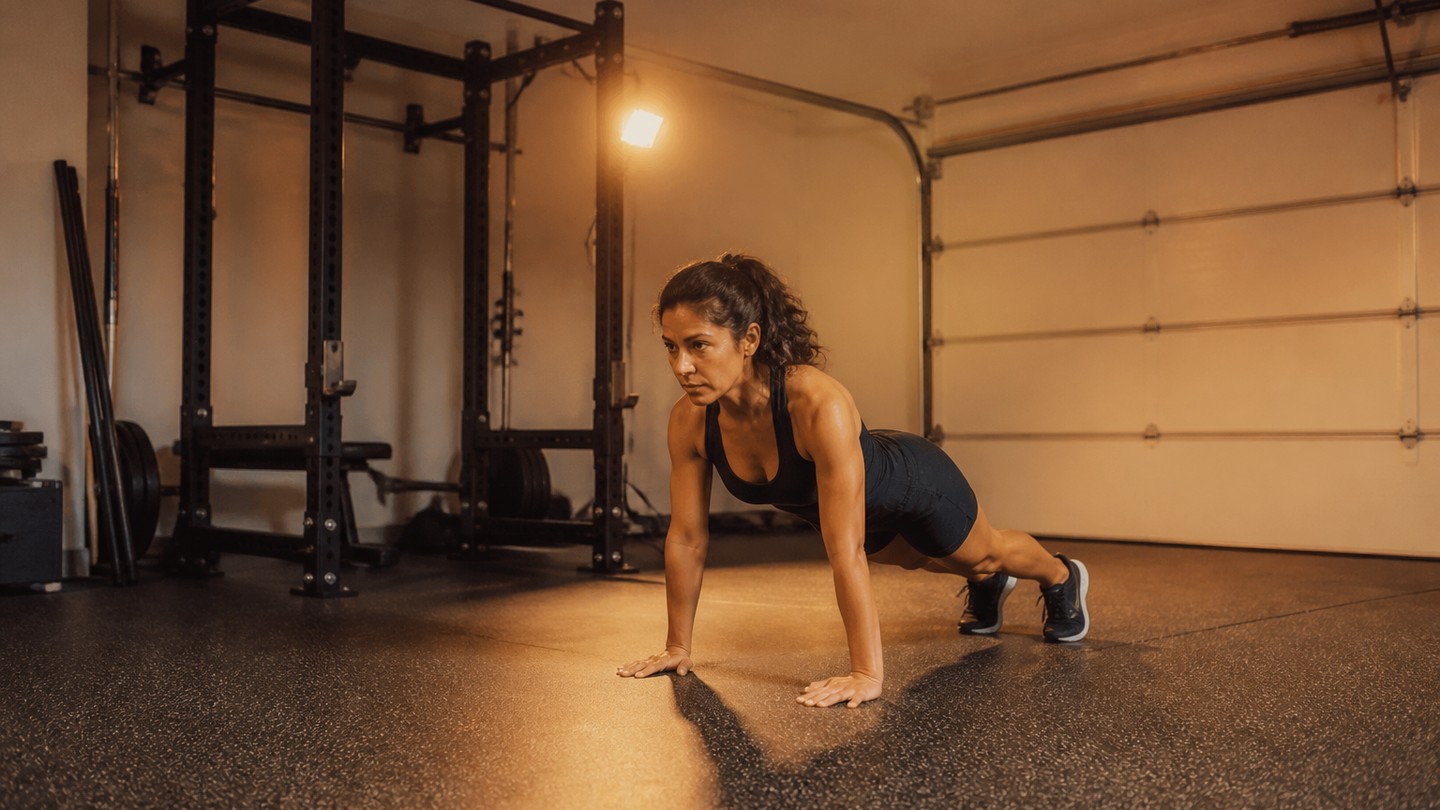
Many wonder if finishing goblet squats, rows, presses, and lunges without machines or barbells truly counts as effective training. This common fear is usually unfounded. A 2017 meta-analysis incorporated 21 studies comparing low- and high-load resistance training and found similar muscle growth when sets are done to failure.
Is it really possible to build muscle at home using only dumbbells?
Yes. Muscle growth comes from consistently making target muscles work hard enough. This doesn't require a commercial gym, just mechanical tension, effort, and sufficient volume over time. The main limit isn't usually the equipment but how exercises are structured. Dumbbells can effectively train chest, shoulders, back, arms, quadriceps, glutes, and hamstrings when exercises align with the weights you have.
This shows dumbbells suffice for muscle growth, though heavier equipment may better support maximum strength goals.
What can a dumbbell-only plan do well, and where does it have limits?
Dumbbells work well for pressing, rowing, split squats, lunges, Romanian deadlifts, curls, lateral raises, and many floor-based chest and shoulder exercises. These offer a wide range to train hard at home.
Limitations mainly appear in lower-body and back exercises where stronger individuals may outgrow dumbbell loads quickly. For example, goblet squats and bilateral deadlifts can stop feeling challenging if grip or dumbbell size limits load before the muscles fatigue.
This does not stop progress; it means exercise selection should be smarter. Single-leg exercises like split squats or single-leg Romanian deadlifts increase difficulty with the same load. Load is only one way to challenge muscles; effort and exercise choice are equally important.
Do you need heavy weights for hypertrophy, or can lighter dumbbells still work?
Lighter dumbbells can promote hypertrophy if sets are pushed hard enough. The critical factor is effort and muscle fatigue, not the absolute weight.
A 2017 analysis showed that muscle growth is similar across low and high load training when sets approach failure. However, strength gains benefit more from heavier loads (>80% 1RM), as indicated by the 2023 meta-analysis.
Therefore, for muscle size at home, lighter dumbbells suffice; for maximal strength, heavier loads are more effective.
How do you keep progressing if you cannot buy heavier dumbbells yet?
Progression comes from making lighter weights feel heavier through exercise variation and rep tactics:
- Substitute bilateral leg exercises with split squats, reverse lunges, or single-leg Romanian deadlifts.
- Add pauses in the most challenging phase of each repetition.
- Slow down the lowering (eccentric) phase.
- Increase range of motion where possible.
- Perform floor presses, push-ups, and rows with strict form to better target muscles.
For instance:
| Problem | Dumbbell-Only Solution |
|---|---|
| Goblet squat feels easy | Switch to split squat variation |
| Rower fatigues lower back | Brace core more and use supported row |
| Press stalls | Add reps, pauses, or stricter control |
| RDL limited by balance | Try supported single-leg version |
Though specific rankings of these methods lack robust evidence, the training logic is sound. Extract more tension from current tools before investing in heavier weights.
Is a full-body dumbbell plan enough, or do you need a split routine?
A full-body dumbbell routine is sufficient for hypertrophy if it allows enough quality volume weekly. You don't need a split just because you train at home.
A 2024 meta-analysis of 14 studies with 392 subjects found similar strength and hypertrophy results between split and full-body programs. Your schedule and recovery capacity weigh more than program labels.
Full-body plans often suit home training well due to simple dumbbell setup and focused sessions. Splits work too if preferred or needed for shorter sessions. The best plan is one you can consistently follow while maintaining hard sets for each muscle group each week.
What is the most common mistake in dumbbell-only home training?
The most frequent error is stopping a workout too far from true effort because dumbbells look light. People confuse light equipment with easy training.
This leads to constant exercise hopping, rushed sets, and the false belief that more variety is needed for growth. Usually, better exercise selection and honest effort are what’s missing.
Another mistake is trying to replicate barbell programs exactly with dumbbells. It's smarter to choose dumbbell-friendly movements and push them hard.
What should you do in your next session?
If your dumbbells already feel easy, try:
- Replacing a bilateral leg exercise with split squats or lunges.
- Adding a pause in your last hard set of rows or presses.
- Improving technique to let target muscles do the work instead of momentum.
- Keeping one or two lifts the same next week and trying to increase reps at the same weight.
Roarer helps you follow programs, log sets, and track your progress to ensure your dumbbell training truly advances muscle growth.