

You feel tired, but are you actually getting stronger?
Walk into most gyms and you'll see the same thing: people moving from machine to machine, picking exercises that feel right that day, chasing a pump or a sweat. It's real effort. It just isn't training.
The difference matters because muscle and strength don't respond to effort in general, they respond to a very specific signal called progressive overload: gradually increasing the demands on your body over time so it has a reason to adapt. The American College of Sports Medicine's position stand on resistance training progression states that continued strength and muscle gains require steadily increasing the training stimulus, not simply repeating the same session. A 2017 meta-analysis in Sports Medicine pooling 18 studies found periodized, progressively structured programs produced significantly larger strength gains than non-periodized training.
Why random workouts hide your progress
Here's the problem with training "whatever feels right": you have no record of what you did last time, so you have nothing to beat this time. You might grab a slightly heavier dumbbell, or you might unknowingly do less than last week, there's no way to tell.
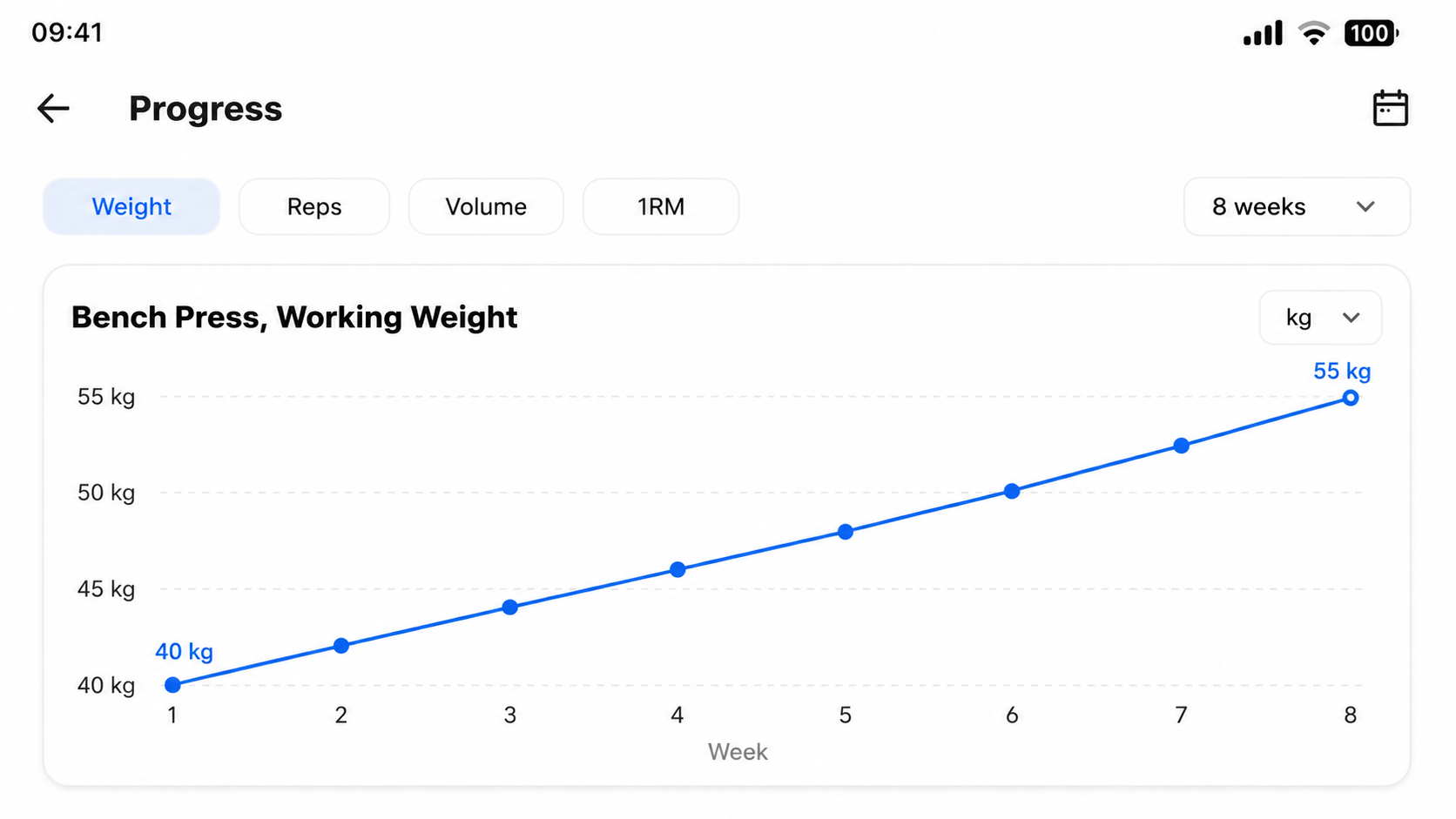
That chart is the entire point. A random session can make you sore and sweaty, but soreness isn't a measurement, it doesn't tell you whether you're stronger than you were a month ago. A program does, because it repeats the same movements on a schedule and forces you to compare today's numbers to last time's.
What a program gives you that randomness can't
- A baseline. You can't add 2.5 kg to a lift you don't remember doing.
- A reason to push. Knowing you did 4x8 at 40 kg last week tells you exactly what to beat today.
- Proof of plateaus. When numbers stop moving, you know it's time to deload or change the stimulus, instead of guessing.
- Recovery you can trust. Structured programs balance volume across the week so you're not accidentally hammering the same muscle group three days in a row.
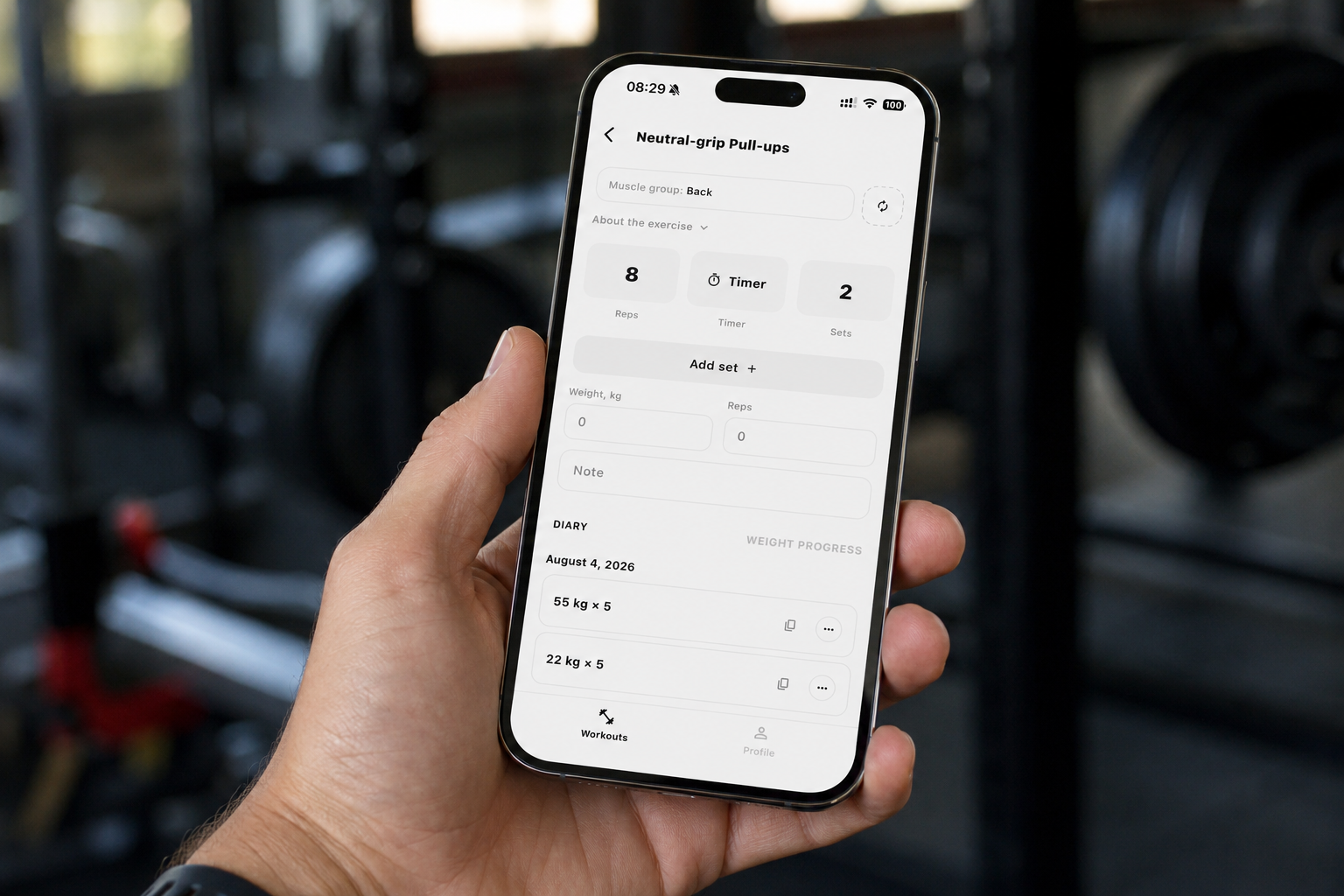
A log like this turns training from guesswork into a simple loop: do the work, write it down, beat it next time.
How to start
You don't need a perfect program to begin, you need a program and a way to log it. Pick a plan that repeats key lifts on a schedule, write down weight and reps every session, and give it at least six to eight weeks before judging results. That's long enough for progressive overload to actually show up as a number, not just a feeling.