
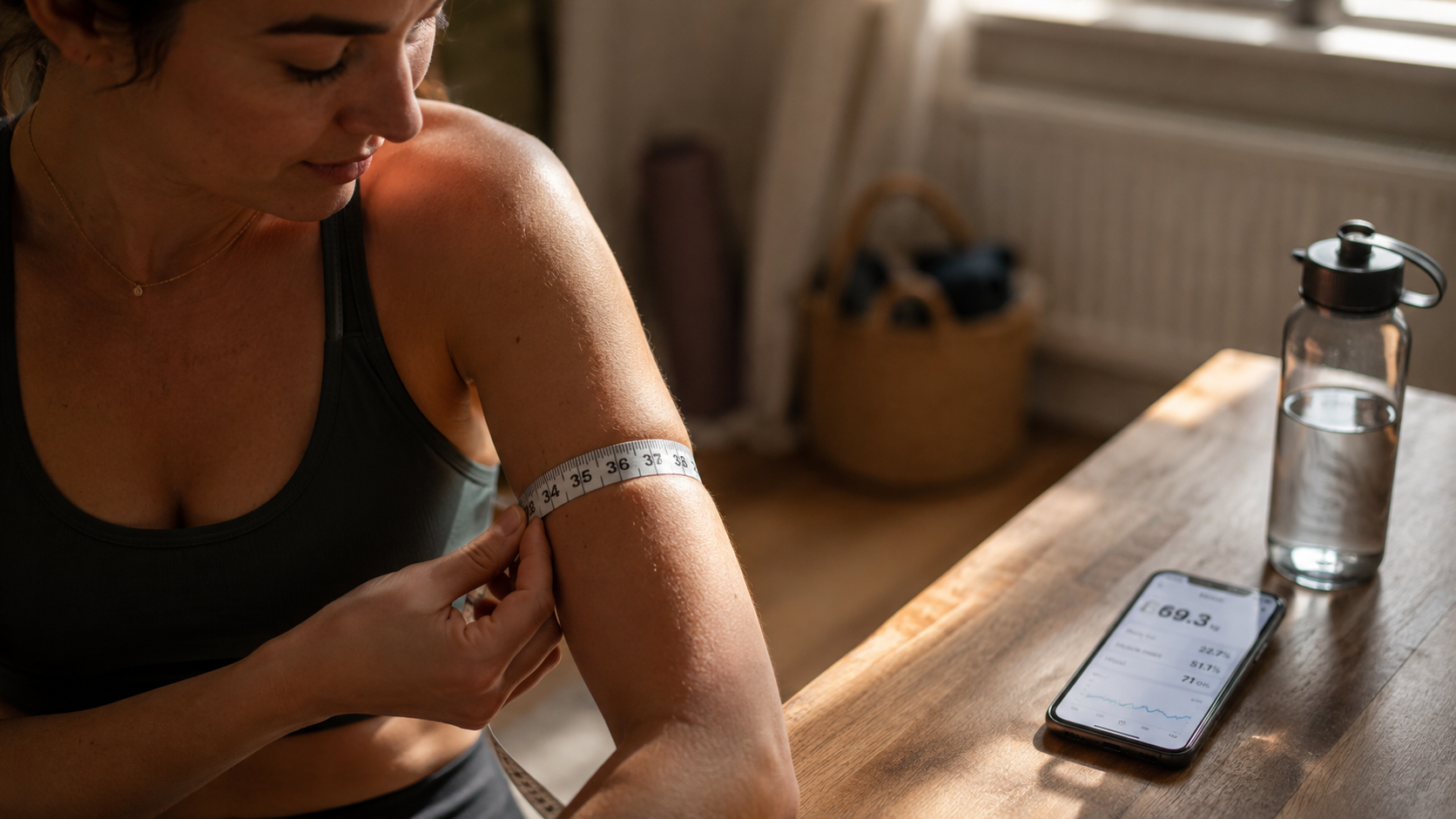
The scale only tells you one number
Step on a scale and you get a single figure: total body mass at that exact moment. It cannot tell you how much of that mass is fat, muscle, water, or last night's dinner. Body weight can shift by a kilogram or more within a single day from sodium intake, hydration, digestion, and hormonal cycles alone, so a flat or slightly rising number does not automatically mean your training is not working.
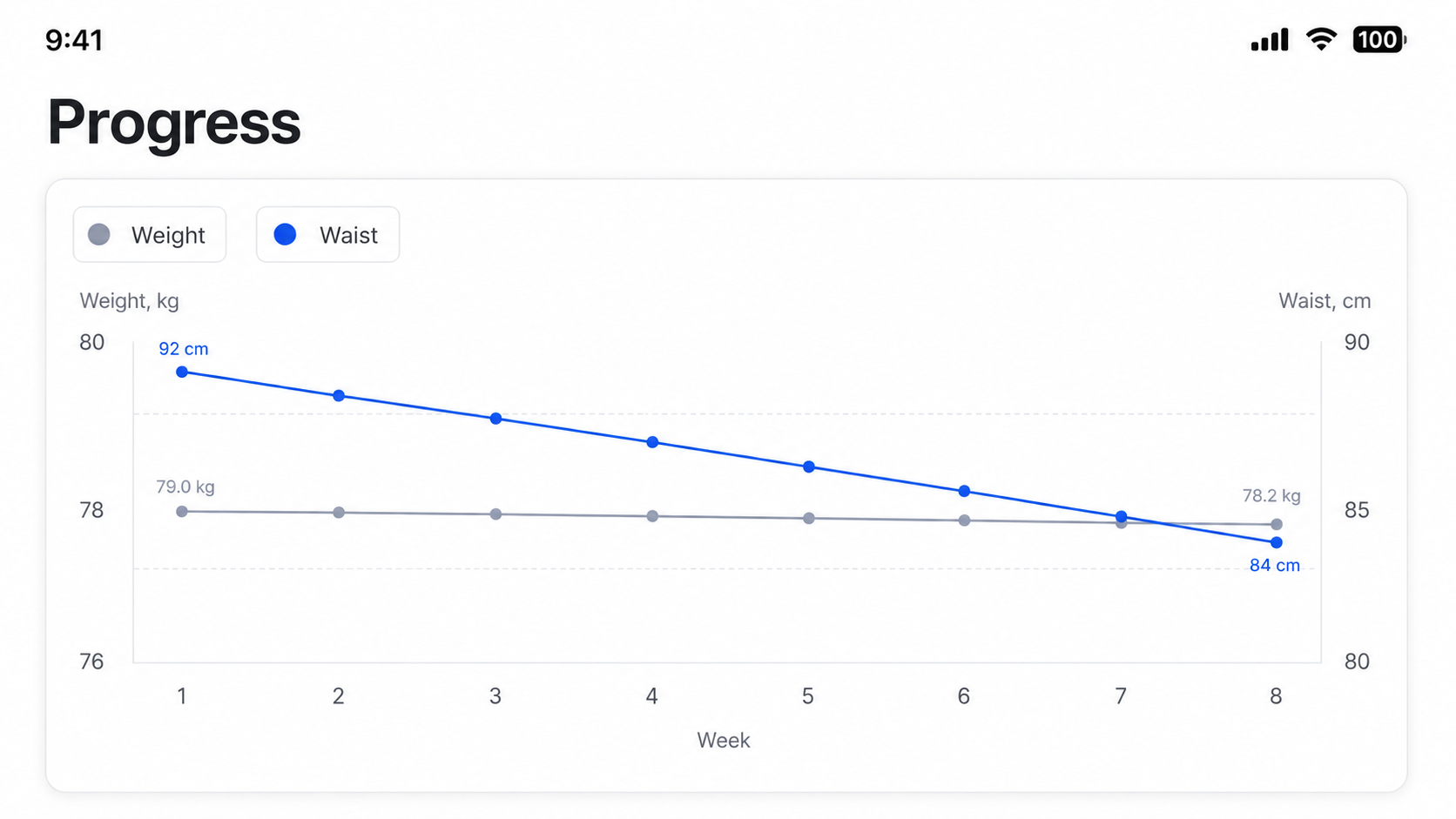
Why the number can stay still while your body changes
Muscle tissue is denser than fat, so a kilogram of muscle takes up noticeably less space than a kilogram of fat. If you are building muscle while losing fat at the same time, a process often called body recomposition, your waist can shrink and your clothes can fit better while the scale barely moves. Two people can weigh exactly the same and look completely different, because weight and body composition are simply not the same thing. Some 2025 research on body composition suggests it may predict long term health more reliably than weight or BMI alone.
What to measure, and how often
A tape measure gives you data the scale cannot. The most useful spots are the waist (measured at a fixed point, such as the level of the belly button, for consistency), hips, chest, upper arms, and thighs. The US National Center for Health Statistics uses a fixed reference point for waist circumference in its national health surveys precisely because consistency matters more than the exact spot you choose.
- Pick fixed points. Measure the same spot every time, ideally first thing in the morning before eating.
- Measure monthly, not daily. Body measurements move slowly, checking every four weeks avoids noise from daily water shifts.
- Keep the tape snug, not tight. It should sit flat against the skin without compressing it.
- Log it somewhere you will not lose it. A number written once and forgotten is not a trend.
How Roarer keeps this simple
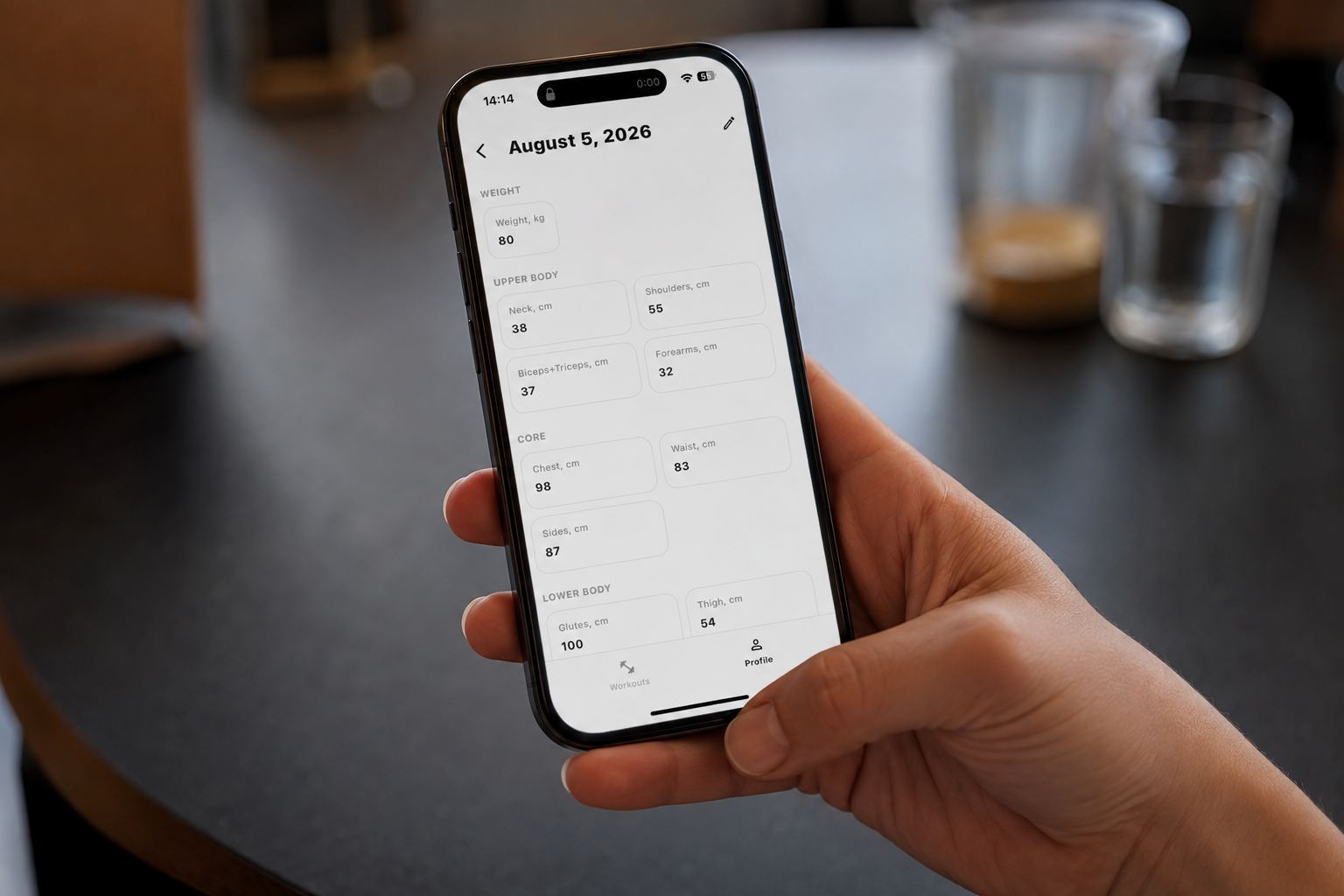
Roarer lets you log body weight and measurements next to your training history, so trends are visible without a separate spreadsheet. Every entry is timestamped automatically, and you can look back at any point to see whether a plateau on the scale lines up with a shrinking waist or growing arms.
Getting started
Pick three or four spots you actually care about, measure them once this week under consistent conditions, and log the number somewhere permanent. Repeat in four weeks. The scale will keep doing what it does, but the tape measure, and a clean history behind it, is what shows whether the work is actually paying off.