

You notice it on a normal week when a session that should feel routine suddenly feels flat again, and then flat again after extra rest. The common mistake is calling every rough stretch overtraining. Normal tired is temporary. A hard week versus deeper hole usually comes down to whether your performance comes back.
Am I overtraining or just tired after a hard week?
Usually, you are just tired after a hard week if your performance rebounds with rest. Overtraining is much rarer and more persistent.
After a demanding block, it is normal to feel heavy, sleepy, sore, or less motivated for a bit. That alone does not mean something is wrong. The real question is whether your numbers, pace, or usual training quality return after you back off.
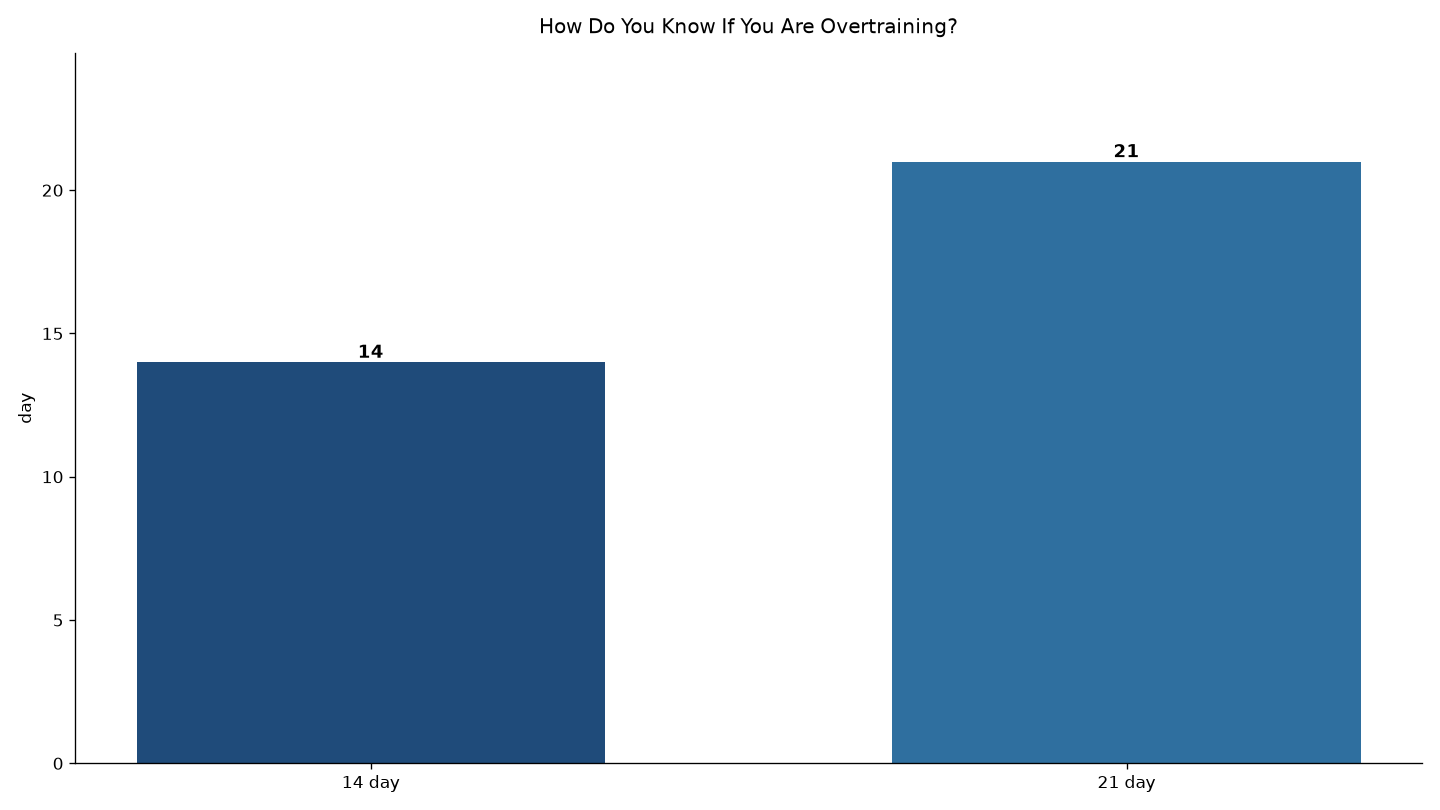
A 2012 practical guide notes one practical cutoff some people use is recovery within 14-21 days versus taking longer than that. That is not a perfect self-test, but it is useful. Recover first, label later.
What is the difference between overreaching, nonfunctional overreaching, and overtraining?
The difference is mostly how deep the fatigue is and how long it takes to come back. Short term fatigue after hard training can be part of the plan, but a long slump is a problem.
Functional overreaching is a planned dip that you recover from and often come back better from. Nonfunctional overreaching is a harder hole, where performance drops and the rebound does not come when you expect it. Overtraining syndrome is the longest and most severe end, with a performance drop that lasts more than 2 months in the 2012 practical guide.
That is why the word overtraining gets overused. Most lifters who feel run down are dealing with accumulated fatigue, poor sleep, low food intake, life stress, or a training plan that got too aggressive for a while.
What are the most realistic warning signs to watch in the gym and outside it?
The most realistic signs are fatigue plus falling numbers, not just one bad workout. Look for a cluster, not a single symptom.
In the gym, watch for these patterns:
- your usual loads feel unusually heavy across more than one session
- your reps drop early for no clear reason
- your warm-ups feel flat instead of waking you up
- soreness hangs around and training quality stays poor
Outside the gym, watch for these patterns:
- sleep gets worse instead of better
- your mood is off, irritable, flat, or unusually unmotivated
- you feel drained all day, not only during training
- normal life stress and training both feel harder to handle
A 2012 practical guide reported that in underperforming athletes with fatigue or repeated infections, a cause was found in 68% of cases, and 93% reported decreased performance. That is a strong reason to rule out life stress and low fuel, and to consider medical causes if recovery drags on.
Is soreness by itself a sign that I am overtraining?
No, soreness by itself is not a reliable sign of overtraining. It can happen after a new exercise, a harder session, or a return after time off.
The myth is that feeling sore means the workout worked, and not feeling sore means it did not. The opposite myth is that a lot of soreness means you have gone too far. Both are only half true. Soreness matters more when it comes with a performance drop that sticks, poor sleep, and fatigue that does not lift.
If soreness is your only issue, back off a bit, move, eat, sleep, and see whether the next sessions normalize. If everything else is stable, soreness alone is a weak signal.
What should I do in my next session?
If you think you are digging too deep, reduce stress right away and see how you respond.
- Cut the session short after your main lifts if you still feel flat.
- Reduce load or total sets, and skip grindy efforts.
- Keep exercise choices familiar instead of adding novelty.
- Leave the gym with a clean session, not a rescue mission.
- Note sleep, stress, and how the session felt so you can compare the next one.
This is where people often make the problem worse. They panic, test themselves, and turn one off day into several. Deload before you diagnose yourself.
How long should a deload or recovery block last before I worry more?
You should worry more when recovery keeps dragging on after you have clearly reduced training load. A rough practical marker from the 2012 guide is whether things settle within 14-21 days or keep going beyond that.
That does not mean you wait in silence while feeling awful. It means you use a short recovery block first, then judge by what happens to performance, sleep, and daily energy. Stop guessing when recovery drags on.
Evidence here is useful but not exact for every lifter. The point is trend, not a perfect calendar. If you keep resting and still feel run down, the hard week versus deeper hole question starts to matter more.
When should I stop guessing and see a doctor?
You should see a doctor when underperformance and fatigue persist despite rest, or when symptoms seem bigger than training alone can explain. Real overtraining is a diagnosis of exclusion, which means other causes need to be ruled out.
The 2012 practical guide makes that point clearly. In one study of underperforming athletes with fatigue or repeated infections, a cause was often found, so guessing is a bad plan when symptoms keep going. If your recovery is not turning around, or repeated illness, unusual fatigue, or a clear lasting performance drop keep showing up, get checked.
If you want to spot a trend earlier, Roarer lets you log sets, keep full workout history, and check per-exercise charts so it is easier to see whether you are actually bouncing back or just hoping you are.