

Jumping straight back into your old gym routine after a break is how strains and setbacks happen. The best way to return is with a skillful, progressive restart over heroics: begin with lighter loads, respect your body's reset, and ramp up with purpose to prevent injury and regain strength.
The NSCA consensus puts safety first: after any period of inactivity, start by reducing both weight and training volume, then build steadily for 2 to 4 weeks. Most athletes who follow a 4-week plan return to 90-95 % of pre-layoff strength by the end of week 4 (PoinT GO Research).
Why does strength drop faster than muscle after a break?
Strength comes from both muscle and neural factors. When you take time off, your nervous system loses the sharpness of movement patterns much faster than muscle tissue breaks down. That’s why your max lift often falls quickly, even though your muscles still look the part. According to ACE, neural adaptations are the first to slip but also the fastest to recover.
For example, if you take a month off, you may find your squat, deadlift, or bench press max is down even if your arms and legs appear similar in size. Studies confirm that decreases in heavy strength after layoff are most dramatic especially in the initial weeks, primarily because of neural factors, not major muscle atrophy. The good news: these neural pathways can be relearned quickly with regular, focused movement once you return.
How much should I reduce load and volume when restarting?
Start training at 40-50 % of your pre-break load and cut your session volume (sets or reps) by about half. Focus every rep on movement quality, not just weight. For example: if you previously bench pressed 80 kg, a focused return would use 32-40 kg for fewer, deliberate reps per set. Keep rest periods long enough to allow full movement control.
Adopting this approach means no rushed max attempts, no testing your limits right away. It also means choosing slightly easier exercise variations at first-such as goblet squats instead of barbell back squats, or push-ups instead of heavy bench press, if you're coming back after injury or a particularly long layoff.
How long does it take to recover strength after a layoff?
Most people regain 90-95 % of their former strength within 4 weeks using a progressive protocol. This rapid return is possible because neural pathways, not just muscle, are retrained. PoinT GO Research points to “90-95 % of pre-layoff strength by the end of Week 4.” Depending on the length and reason for your break, individual experiences may vary: coming back after a minor injury or vacation is usually faster than after surgery or illness, but gradual ramp-up works in all cases.
What phases should a comeback plan include?
Use a 3-phase, 4-week progression:
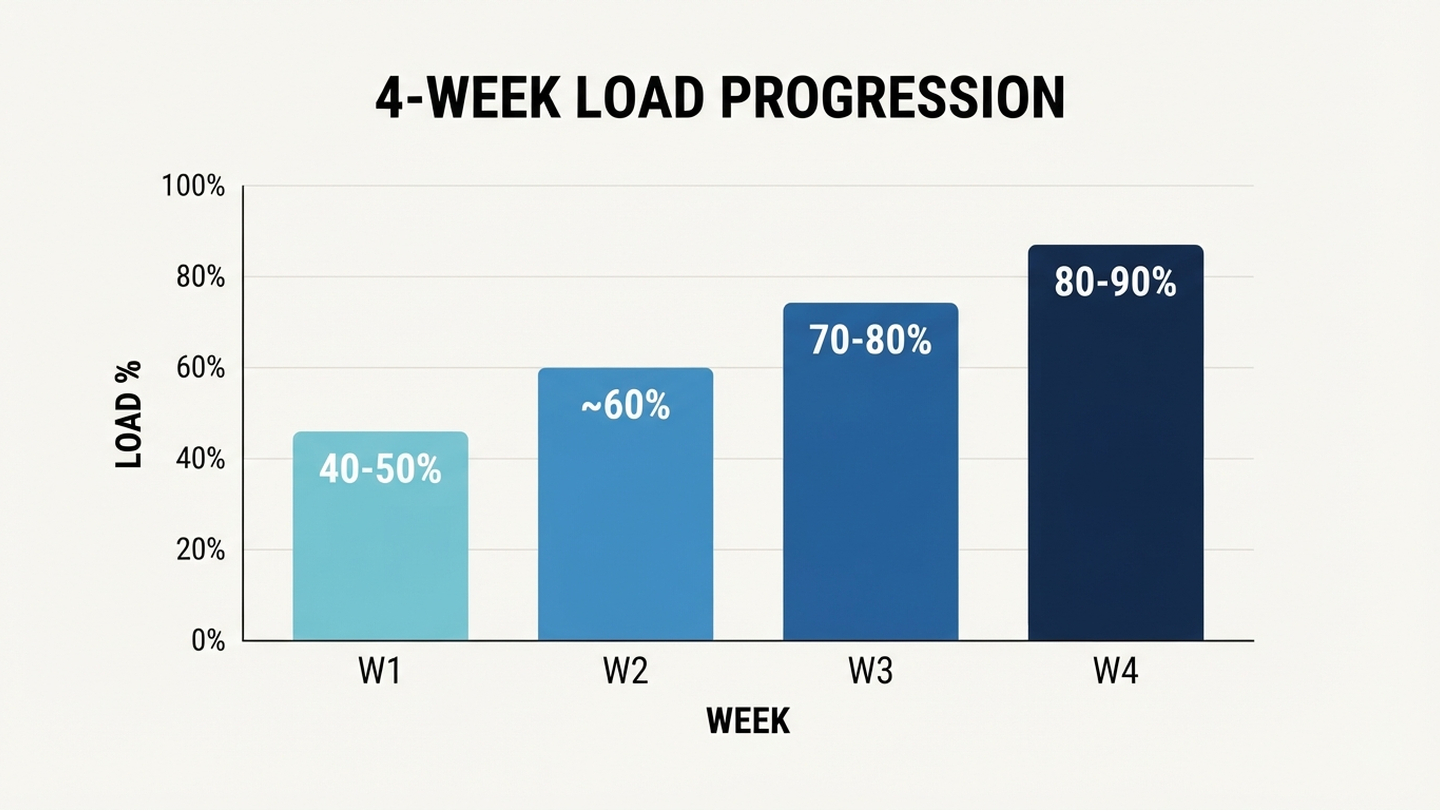
- Weeks 1-2: 40-60 % pre-layoff load, higher reps, strict technique, easier variations
- Week 3: 60-80 % pre-layoff load, reintroduce intensities, keep rest generous
- Week 4: 80-90 % load, restore normal volume, add complexity if movement feels sharp
This mirrors NSCA guidelines for safe, ramped-up return over 2-4 weeks.
A real-world example: An intermediate lifter who squatted 100 kg before a month-long break might start Weeks 1-2 at 40-60 kg, using 3-4 sets of 8-10 controlled repetitions. By Week 3, they would work up to 70-80 kg, and by Week 4, 85-90 kg with a return to typical training volume. This method helps prevent overload and keeps progress consistent.
How can I avoid injury when returning to training?
Respect fatigue and soreness signals-if pain surfaces, stop or modify at once. Prioritize controlled tempo, solid technique, and skip max efforts early. A 2024 ACE review warns that pushing too quickly after a break is a common path to strains or joint problems. It is better to repeat a manageable weight for a second week than to jump too quickly and risk a setback. Smart ramp-up over snapback wins every time.
Some lifters enjoy adding novel warm-ups, like aerobic or mobility drills, before their working sets. Gradually reintroducing movement patterns-as simple as practicing squats with an empty bar for several sets-can further safeguard your comeback.
Should I change exercises or keep familiar movements?
Rebuild consistency and patterning with your most familiar compound lifts. Give form its due. Stick to the movements you owned before the break, but lighten loads and simplify as needed. After four steady weeks, layer in new variations or accessories if you want a fresh challenge. For longer layoffs or after injury, swap in an alternative (e.g. single-leg movements instead of barbell squats) during your first sessions, then shift back to your standard lifts as confidence returns.
Tracking sessions in Roarer makes it easy to see your smart progression week to week, and helps your body opt back in with exactly the detail and patience comeback plans require.